



 admin
admin When Online Gambling Is Legal and When It Is Not in Different Places
If you sit quietly and think about the internet, it feels like a world without borders. You can watch videos from another country, talk to people far away, and even play games with strangers across the globe.
But when it comes to online gambling, things are very different.
Even though the internet connects everything, laws still belong to each country. What is perfectly legal in one place may be completely banned in another. This creates confusion for many players.
To understand this properly, we need to look at how different governments approach online gambling and why their decisions vary so much.
Why Online Gambling Is Legal in Some Countries
In many parts of the world, online gambling is allowed but strictly controlled.
Countries like United Kingdom have built strong regulatory systems. Licensed operators must follow strict rules to ensure fair play and player safety.

Key Reasons Governments Allow It
1. Massive Revenue Generation
Online gambling is a huge global industry.
- The global online gambling market is estimated to be worth over 90 billion dollars
- Governments collect billions in taxes every year from licensed operators
For example:
- The UK gambling industry generates billions in annual tax revenue
- European countries rely heavily on regulated betting markets
This money supports:
- public infrastructure
- healthcare systems
- education programs
A policy expert once said:
“Legal gambling is not just entertainment, it is a structured economic activity.”
2. Better Control Instead of Black Markets
When gambling is banned, it often moves underground.
Players may still access unregulated websites, which can be unsafe. These sites may:
- manipulate results
- delay payments
- lack player protection
Governments that legalize gambling prefer to control the system rather than fight it.
Licensed platforms must:
- verify player identity
- follow fairness audits
- offer responsible gambling tools
3. Consumer Protection
Legal markets allow governments to introduce safety features such as:
- deposit limits
- time limits
- self exclusion programs
These tools are designed to reduce gambling harm while still allowing people to play.
Why Some Countries Ban Online Gambling Completely
On the other side, many countries choose to ban or heavily restrict online gambling.
For example, United Arab Emirates has strict laws against gambling due to cultural and religious values.
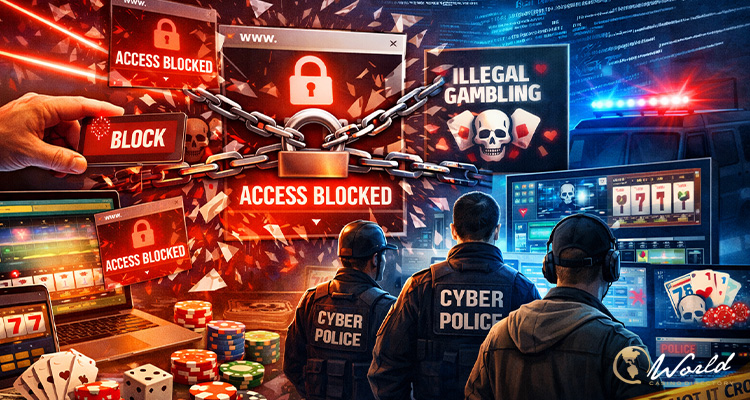
Main Reasons Behind Bans
1. Risk of Gambling Addiction
Studies show that around 1 to 3 percent of adults globally struggle with serious gambling problems.
Online gambling increases this risk because:
- it is available 24 hours a day
- there is no physical limit like a casino visit
- players can gamble in isolation
A former online gambler shared:
“When it is on your phone, it never really stops. You can keep playing without even realizing how much you have lost.”
2. Social and Family Impact
Governments worry about the hidden effects of online gambling.
Common issues include:
- financial debt
- family stress
- mental health problems
In societies where family stability is highly valued, these risks are taken very seriously.
3. Cultural and Religious Beliefs
In many countries, gambling is not just a legal issue but a moral one.
For example:
- Islamic law prohibits gambling
- some Asian cultures discourage speculative activities
These values strongly influence national policies.
4. Concerns About Fraud and Money Laundering
Online platforms can be used for illegal financial activities if not properly monitored.
Governments worry about:
- identity fraud
- money laundering
- cross border illegal transactions
Instead of managing these risks, some countries choose to block gambling websites entirely.
The Middle Ground: Partial or Mixed Laws
Not every country follows a simple yes or no rule.
Many countries take a hybrid approach.
For example, India has a complex system where:
- some states allow online skill based games
- others restrict or ban betting activities
- laws vary depending on interpretation
Image: Different Legal Zones
Examples of Mixed Systems
- Sports betting may be legal while casino games are not
- Only government approved platforms may operate
- Some regions allow gambling while others restrict it
In the United States:
- states like New Jersey allow online casinos
- other states still restrict them
This creates a patchwork of laws even within one country.
What Real Players Say About Different Laws
Online discussions reveal how confusing this global situation can be.
One player wrote:
“I can play legally when I travel, but in my home country the same site is blocked.”
Another shared:
“Legal sites feel safer. I know I will get paid if I win.”
These experiences highlight the difference between regulated and unregulated environments.
Key Statistics That Explain the Reality
- Over 85 countries have some form of legal online gambling
- Around 70 plus countries still restrict or ban it
- Mobile gambling accounts for more than 50 percent of online betting activity
These numbers show how rapidly the industry is growing while laws try to keep up.
The Real Issue: Freedom vs Protection
At the center of this debate is a simple but powerful question:
Should people have the freedom to gamble online, or should governments protect them from its risks?
Different countries answer this question in different ways:
- Some prioritize economic growth and personal freedom
- Others prioritize social safety and cultural values
There is no single solution that works everywhere.
Final Thought: A World Divided by Digital Rules
Online gambling may exist on the internet, but it is still shaped by real world laws.
Some countries open the door with rules and safeguards.
Some keep it firmly closed.
Others open it only slightly and watch carefully.
The result is a world where the same activity can be:
- legal in one place
- restricted in another
- completely banned somewhere else
So when you think about online gambling, remember that it is not just about games on a screen.
It is about law, culture, money, and human behavior all coming together in a fast changing digital world.
0 Comment