
When most people think about casinos, they imagine private companies. Bright lights, luxury hotels, and businesses focused on profit.
But in several parts of the world, casinos are not run by private operators.
They are run by governments.
This model exists in countries like Finland and regions such as Macau, where the state plays a direct role in controlling gambling activities.
At first, this idea may feel unusual.
Why would a government operate casinos instead of simply regulating them?
The answer lies in a mix of economics, public welfare, control, and trust. When governments run casinos, the entire system changes in ways that are both beneficial and complex.
When Profit Meets Public Responsibility
A private casino exists to maximize profit. The longer players stay and the more they spend, the more revenue the business generates.
A government-run casino works differently.
Yes, it still earns money. But instead of profits going to private owners, they are directed into public systems like:
- healthcare
- education
- infrastructure
For example, in Finland, the state-owned gambling operator channels hundreds of millions of euros every year into social programs, sports, and cultural activities.

This creates a different purpose for gambling revenue.
Instead of private wealth creation, it becomes a public funding tool.
However, this creates a unique tension.
Governments must balance two roles:
- earning revenue from gambling
- protecting citizens from its harms
A regulator once described this challenge simply:
“We are both the operator and the watchdog. That balance is not easy.”
A More Controlled and Regulated Experience
When governments run casinos, the environment tends to be more controlled compared to private establishments.
Private casinos often focus heavily on stimulation:
- flashing lights
- fast-paced gameplay
- aggressive promotions
Government-run casinos are usually more restrained.
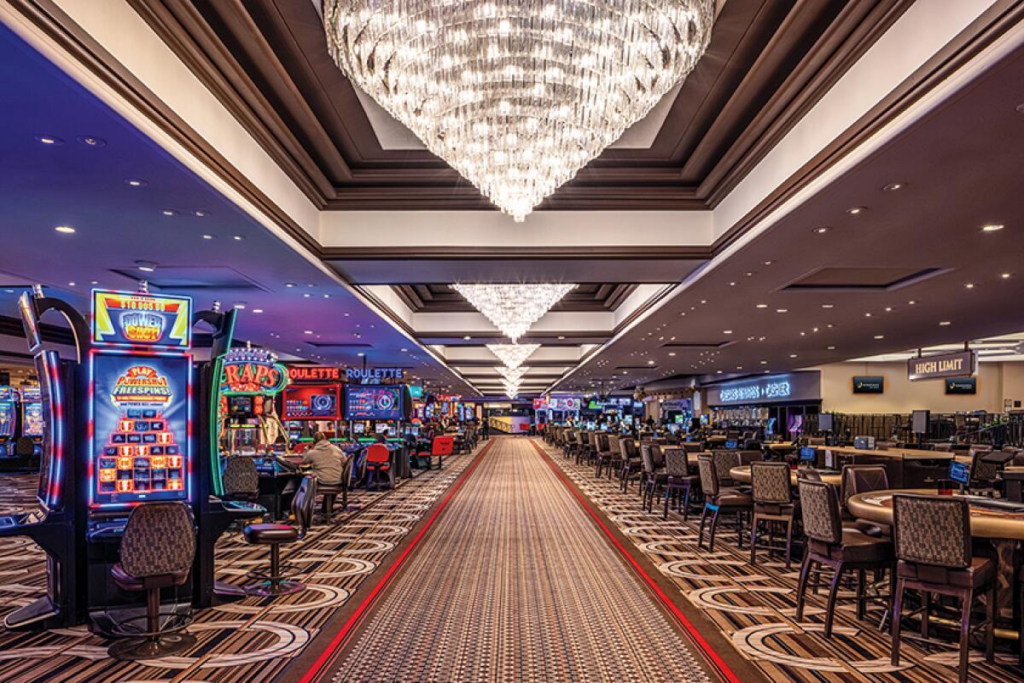
Here are some differences commonly seen:
| Feature | Private Casinos | Government Casinos |
|---|---|---|
| Marketing | Highly aggressive | Limited or regulated |
| Player limits | Flexible | Often restricted |
| Monitoring | Standard | Strong behavioral checks |
| Transparency | Business-focused | Public accountability |
Many government systems introduce measures such as:
- spending limits
- identity verification
- self-exclusion programs
- time restrictions on play
In some European countries, players must set monthly loss limits before gambling online.
These features are designed to reduce addiction and financial harm.
Real Numbers: How Big Is Government Gambling?
Government involvement in gambling is not small.
Here are some key insights:
- In Norway, gambling is largely controlled by the state to reduce addiction risks
- In Finland, the government monopoly system contributes over 1 billion euros annually to public welfare programs
- Some regions rely on gambling taxes for a significant portion of public funding
These numbers show why governments are interested in running casinos directly.
The revenue is simply too large to ignore.
What Real Players Say
Player experiences in government-run systems are mixed.
Some people feel safer.
One casino visitor shared:
“I feel more comfortable knowing the system is regulated and not just trying to squeeze money out of me.”
Others feel restricted:
“It feels too controlled. Less choice, fewer promotions, and not as exciting as private casinos.”
This reflects the core trade-off.
Safety often comes at the cost of freedom and excitement.
The Ethical Dilemma Governments Face
One of the biggest debates around government-run casinos is ethical.
The same authority that warns people about gambling risks is also running the system.
This creates an uncomfortable question:
Can a government truly discourage gambling while profiting from it?
A policy expert once said:
“It is like taxing cigarettes while selling them. The intention may be control, but the conflict remains.”
There is also the issue of dependency.
If governments start relying heavily on gambling revenue, they may face difficult choices:
- reducing gambling could protect citizens
- but it could also reduce public income
This creates a long-term policy challenge.

This balance is at the heart of every government-run casino system.
Limited Competition and Player Choice
Another major difference is competition.
In many government-controlled systems:
- private operators are restricted or banned
- fewer casino brands are available
- game variety may be limited
For example, Finland operates under a state monopoly model, where one operator controls most gambling activity.
This reduces competition but increases control.
From a player’s perspective:
- fewer choices
- more regulation
- less aggressive offers
From a government perspective:
- easier monitoring
- reduced illegal gambling
- stronger oversight
The Long-Term Impact on Society
The impact of government-run casinos goes beyond gambling floors.
Positive Effects
- steady funding for public services
- reduced illegal gambling markets
- stronger consumer protection
Negative Concerns
- moral conflict in state involvement
- dependency on gambling income
- reduced market innovation
Some researchers argue that government control reduces extreme gambling behavior, while others believe it simply changes how people gamble rather than reducing overall participation.
Final Thought: A System Built on Balance
When governments run casinos, they are trying to do something very difficult.
They are trying to combine:
- entertainment
- revenue generation
- public protection
This is not an easy balance.
Too much focus on profit can harm citizens.
Too much control can limit freedom and reduce economic potential.
Every country handles this differently.
Some succeed in maintaining balance. Others struggle with the contradictions.
At its core, this model reflects something very human.
It shows how societies try to manage activities that bring both excitement and risk.
When the government steps into the role of a casino operator, it is not just running games.
It is managing behavior, responsibility, and trust all at once.
And that is a much more complex game than anything played on a casino floor.
Leave a Reply